• One Day Workshops
    • Online Classes
    • Private Lessons
  • Travel Workshops
    • Featured Workshops
    • Class Calendar
    • Summer Photo Pass 2026
    • Gift Certificates
    • Class Packs
  • Blog
  • Sign In My Account
Menu

Boston Photography Workshops

15 Channel Center Street
Boston, MA, 02210
6172215361
Unlock your camera's potential

Your Custom Text Here

Boston Photography Workshops

  • Classes
    • One Day Workshops
    • Online Classes
    • Private Lessons
  • Travel Workshops
  • Calendars
    • Featured Workshops
    • Class Calendar
  • Gift Cards & Offers
    • Summer Photo Pass 2026
    • Gift Certificates
    • Class Packs
  • Blog
  • Sign In My Account

Student Blog: A Tale of Two Wide Angle Lenses

September 3, 2019 Kathrin Havrilla
@Maddox Grey

@Maddox Grey

“Which lens should I buy next?” At the BPW, we hear this question almost every day. To help give you some insider’s info, we’ve invited BPW student and perpetual travel photographer Maddox Grey to guest blog for us this week and compare some newer wide angle lenses to find out which one is her favorite. Take it away, Maddox...


A good wide angle lens is a must-have in any photographer’s collection, making your landscape shots more epic, wildlife photography more inclusive, and portraits more interesting. While not ideal as an everyday lens, in some circumstances a wide angle lens is practically a requirement—as I found out earlier this year on my weeklong trip around the Grand Circle to Zion National Park, Glen Canyon, Antelope Canyon, and the south rim of the Grand Canyon. 

Because I’m a responsible photographer and not at all a person with a serious lens addiction (<sarcasm>), I decided to rent a couple of wide angle lenses to compare on this trip before making a purchase. 

Which Lenses Did I Test?

After some initial research I settled on testing the Sigma 14-24mm f/2.8 DG HSM Art and the Tamron SP 15-30mm f/2.8 Di VC USD G2, both retailing at $1,299. 

Did I already lose some of you because I neglected to include a Nikon lens (such as the Nikon AF-S NIKKOR 14-24mm f/2.8G ED) in this comparison? I hear you: “Clearly a brand like Nikon is going to have a superior lens to these third-party brands. I mean, it’s NIKON, right?” And you would be absolutely correct! If it was the year 2010. 

Until the last five years or so, many of the third-party brands had a reputation as being cheaper builds with lower quality, and there was a very clear divide between them and the major brands like Nikon and Canon. But both Sigma and Tamron have worked hard to rebrand themselves as quality lenses that not only measure up to the name brands, but surpass them. Sometimes they achieve this and sometimes they don’t, but make sure you don’t dismiss them like you may have in the past. 

Further Nikon sidebar: Speaking of 2010, you know what was almost three years old in 2010? The aforementioned Nikon AF-S NIKKOR 14-24mm f/2.8G ED lens, originally designed in 2007 and is pretty much the same as it was when it was released without any major improvements. It was a great lens then, and if you have one in your collection, it’s still a great lens. But the Nikon lens shows its age in terms of performance when compared to the Sigma and Tamron lenses, both of which came out in 2018, AND it costs $600 more. I will happily pay more money if I believe I’m getting more bang for my buck, but in this particular case the third-party lenses were the winners, and so they got to go on a trip with me. 

Image

Image source

Tamron SP 15-30mm f:2.8 Di VC USD G2 Lens.jpg

Image source

Build Quality

Before we get to the fun part (photos!), let's spend some time on the build of these models. In case you were unaware, lenses are expensive (<sarcasm again>). So it’s important that they are built tough and can endure all sorts of environments. This is especially true for landscape lenses that are often used outdoors in less than ideal situations. 

Mother Nature helped me out  on this Grand Circle adventure by allowing me to fully test the durability of these lenses. I was caught in a downpour (not once, but twice) and a dust storm, and may or may not have slammed my camera against some rocks a few times while clinging desperately to a chain on a thin rail. I was not kind to my camera equipment. Don’t be like me. (Also, don’t go on Angel’s Landing in Zion National Park if you’re scared of heights.)

All that said, both of these lenses held up quite well, and equally. Tamron and Sigma have improved their weather sealing considerably and neither lens was impacted from the rain or almost constant dust. Both also have extra protection in the form of built-in lens hoods, which are common for super wide angle lenses, but also means that you can’t use filters of any kind, i.e. protective, polarizing, non-density, etc. 

When it comes to the differences in the builds:

  • The Tamron lens is slightly lighter at 2.42 lb compared to the 2.53 lb of the Sigma lens; not really a noticeable difference.

  • The Tamron lens has image stabilization while the Sigma does not. However, because you’re probably using your wide angle lens for daytime landscape photography and/or with a tripod, you may find that this isn’t a dealbreaker for you.

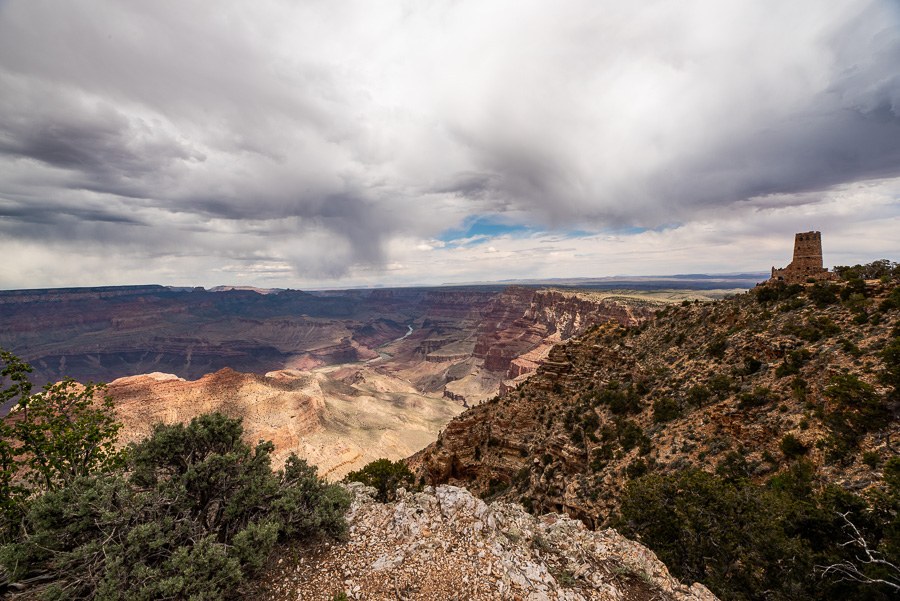
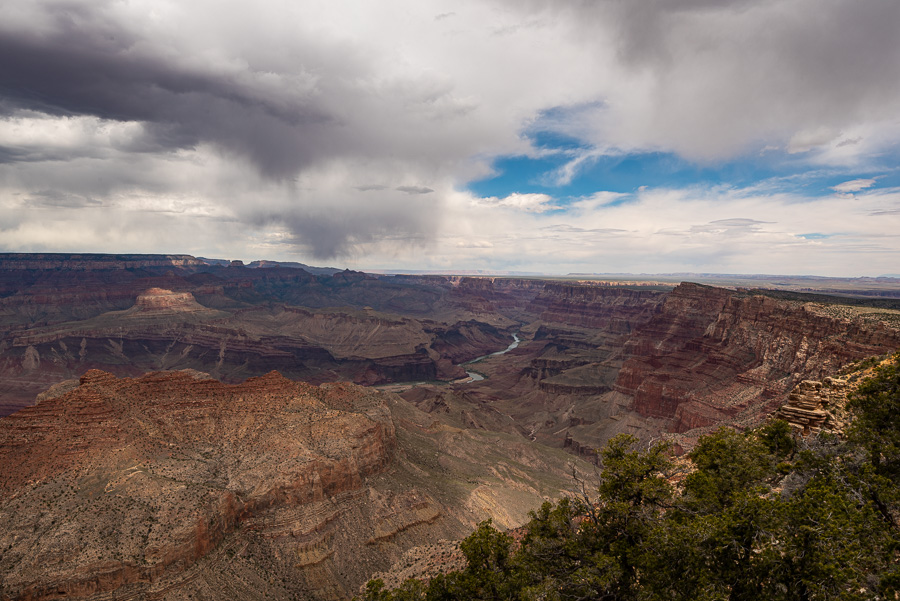
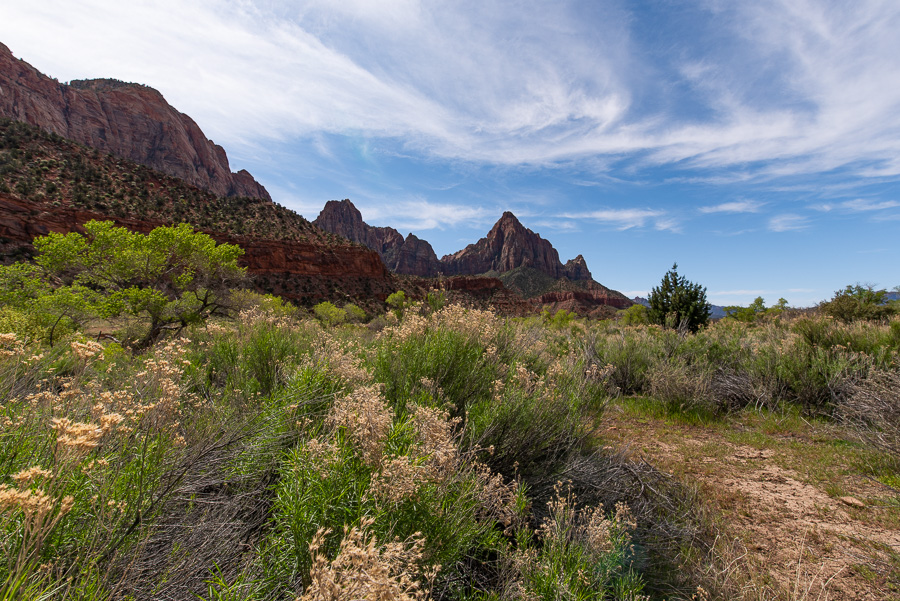
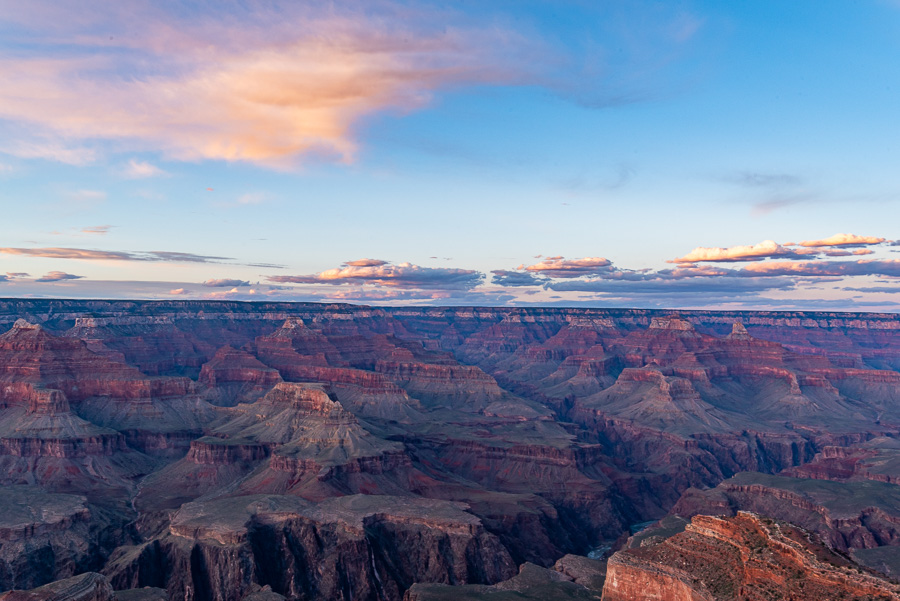
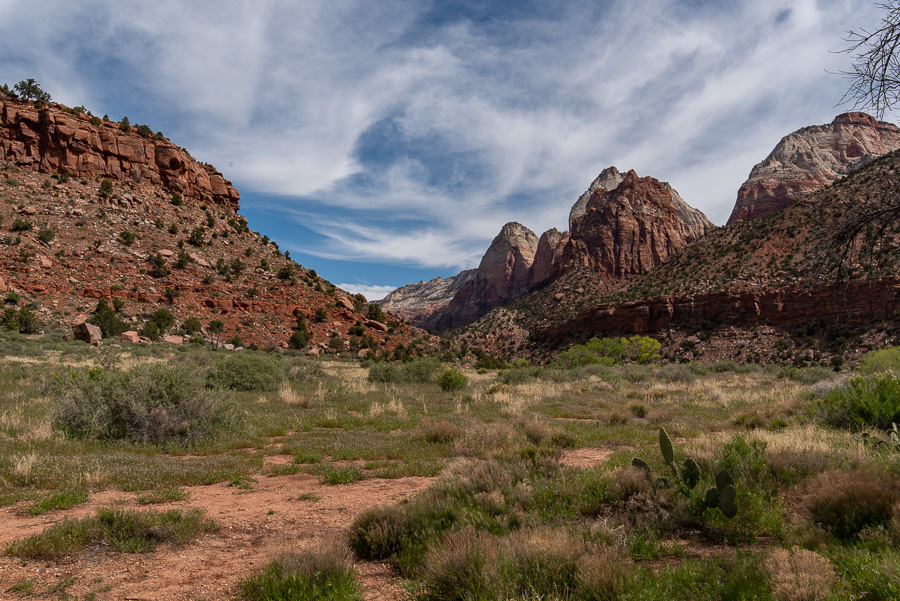
Shot with the Sigma, 14mm

Shot with the Sigma, 14mm

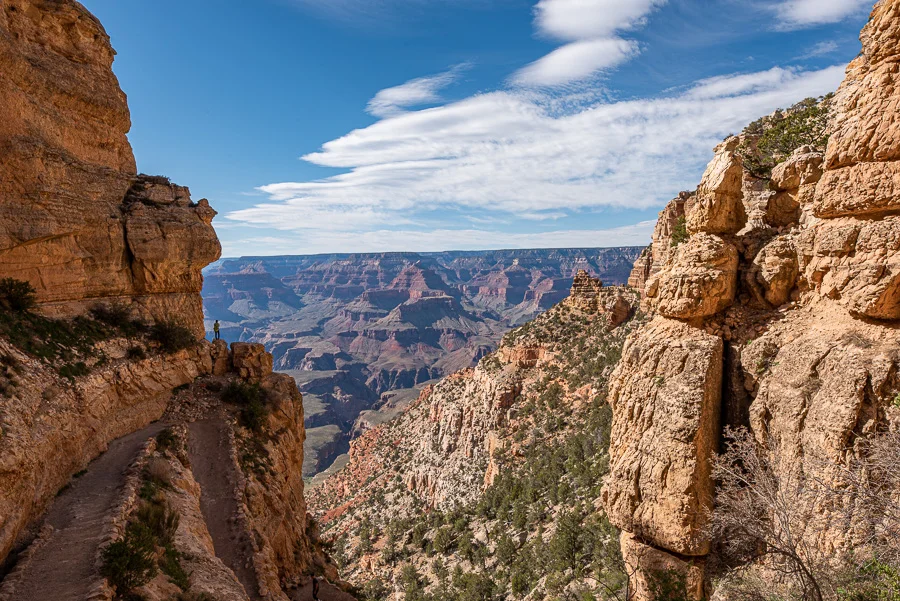
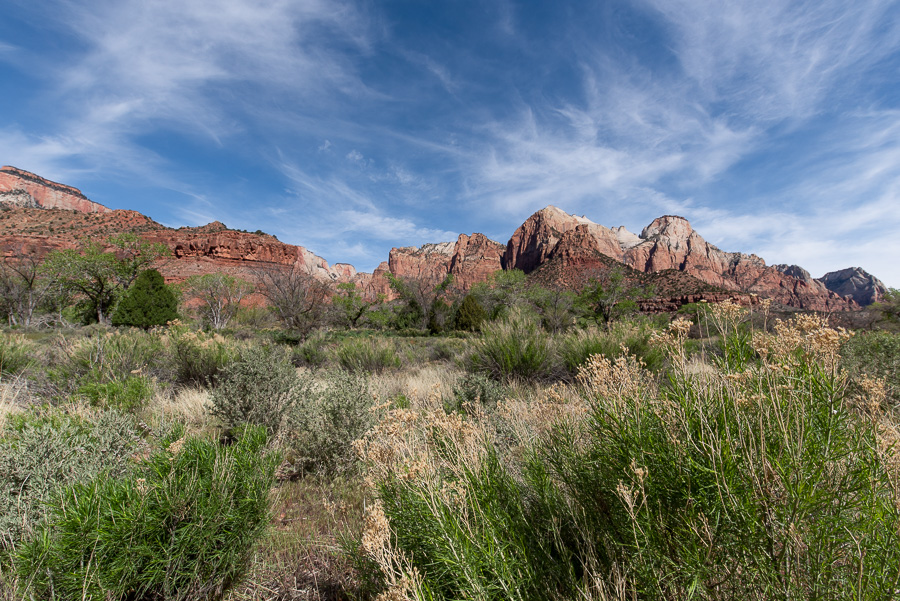
Shot with the Tamron, 15mm

Shot with the Tamron, 15mm

Image Quality

On to the fun stuff: How do the lenses compare when it comes to actually taking pictures? 

  • Autofocus: Both lenses have great autofocus systems, and both lenses have the same fault: a minimum focus distance of roughly 11”. This was easily the most frustrating aspect I found . Usually when you think of landscape images, you think of a vast landscape with both the foreground and background mostly in focus. But another way to take interesting landscape photographs (and wildlife photographs) is to have the subject fairly close in the foreground of the frame with the background…well…in the background, such as focusing on a single wild flower in a field full of flowers. These photographs tend to be very eye-catching, but they are harder to pull off when you have to be almost a foot away from your subject. When I was trying to accomplish this I often ended up switching lenses. Aside from this, both lenses were quick to autofocus and only slowed down slightly in lower light conditions.
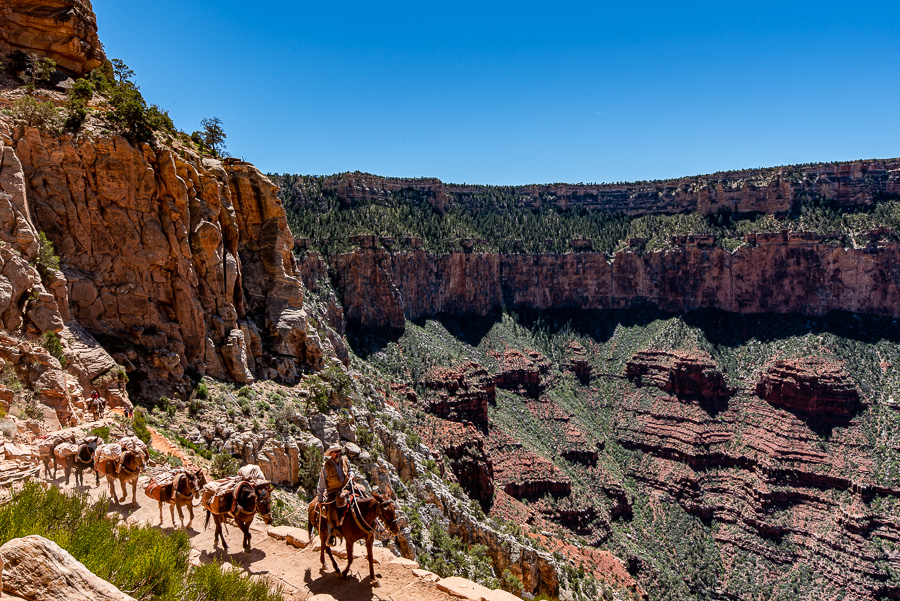
 Taken with Tamron; features an animal with a vast landscape as the backdrop, which is achieved by using a wide-angle lens as opposed to using a fast zoom lens to get a close-up picture of wildlife either still or in motion.

Taken with Tamron; features an animal with a vast landscape as the backdrop, which is achieved by using a wide-angle lens as opposed to using a fast zoom lens to get a close-up picture of wildlife either still or in motion.

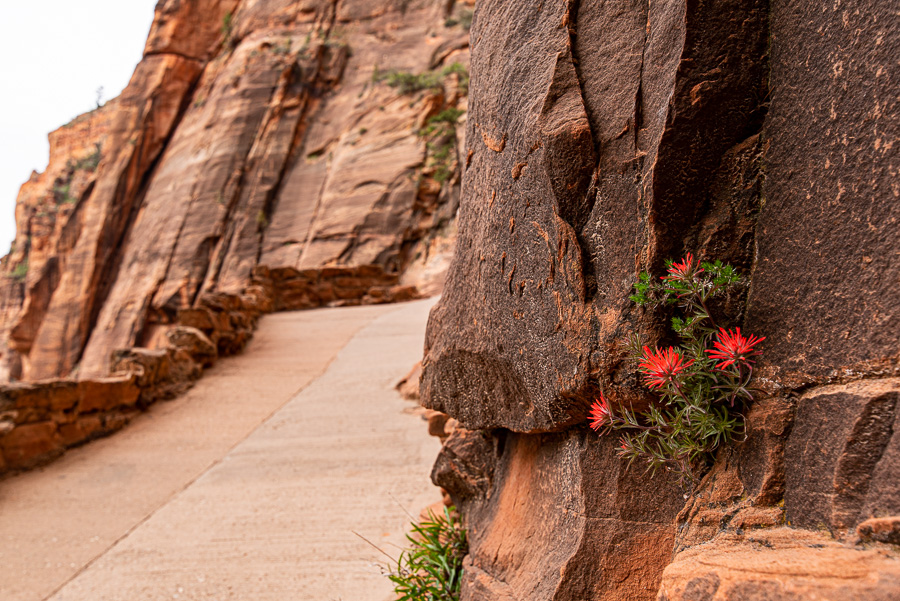
 From Zion National Park, taken with Tamron; the image was taken from a little less than a foot away which was as close as I could get. You can actually see that the flower isn’t the focus point but the rock directly behind it. The photo would have c

From Zion National Park, taken with Tamron; the image was taken from a little less than a foot away which was as close as I could get. You can actually see that the flower isn’t the focus point but the rock directly behind it. The photo would have come out better if I could have gotten closer to the flower but that is a limitation of both lenses.

Back to the comparisons:

  • Aperture: Both lenses also feature a maximum aperture of 2.8, which makes them excellent choices for astrophotography. 

  • Distortion and vignetting: About the same in both lenses and considerably better than a lot of other lenses on the market. 

  • Focal range:  It’s pretty close at 14-24mm for the Sigma vs. 15-30mm for the Tamron with the latter giving you a little bit more wiggle room. I often found myself appreciating being able to zoom out a little more on the Tamron lens and felt that it provided a more functional range than the Sigma.

So at this point the lenses are pretty even and you’re basically flipping a coin to choose between them. But here is where that comes to an end: The Sigma is considerably sharper than the Tamron. 

Even while shooting and reviewing images on the tiny screen on the back of my camera, I noticed a difference. If you decide you want to do further research on these lenses and read other reviews (don’t worry, I won’t be offended), you’ll see that sharpness is a common point in the comparisons. I don’t think it’s so much that the Tamron lens is lackluster in the sharpness area so much as the Sigma is just a ridiculously sharp lens.

Sigma Photos:
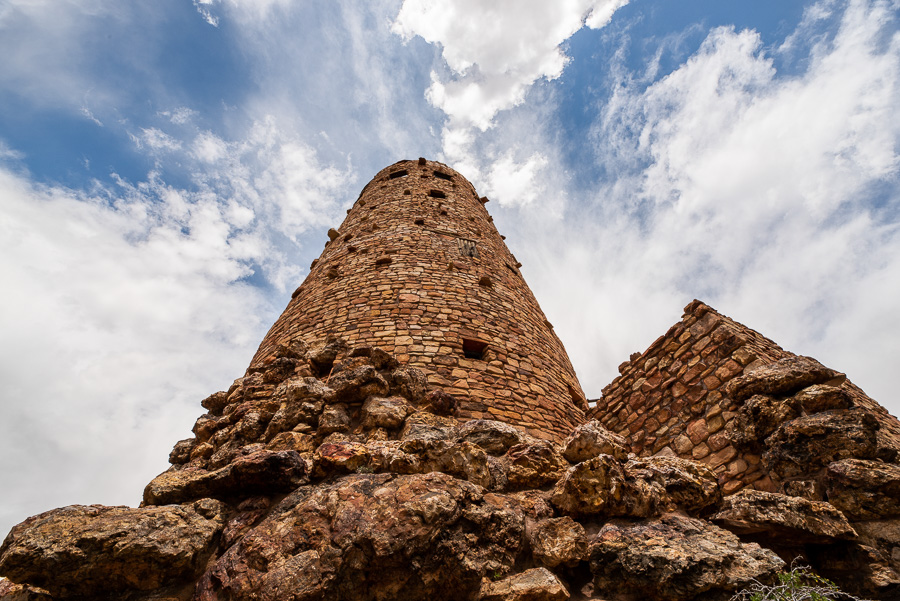
Sigma-14mm-F16-1.jpg
Sigma-14mm-F16-2.jpg
Sigma-22mm-F16.jpg
Sigma-24mm-F16.jpg
Sigma-14mm-F16-1.jpg Sigma-14mm-F16-2.jpg Sigma-22mm-F16.jpg Sigma-24mm-F16.jpg

Tamron Photos:

Tamron-15mm-F13-1.jpg
Tamron-15mm-F13-2.jpg
Tamron-29mm-F16.jpg
Tamron-30mmF11.jpg
Tamron-15mm-F13-1.jpg Tamron-15mm-F13-2.jpg Tamron-29mm-F16.jpg Tamron-30mmF11.jpg

Conclusion

As an owner of six Tamron lenses, and someone who definitely entered this comparison with a bias towards the Tamron lens, I’ve got to give the winning prize to the Sigma 14-24mm f/2.8 DG HSM Art Lens because sharpness wins. The Tamron has a more useful focal range and in some cases the image stabilization might come in handy, but its sharpness simply doesn’t compare to the Sigma. 

Now if you’ll excuse me, I’m off to apologize to all of my Tamron lenses…


In Helpful Tips Tags Student Work, Helpful Tips, Photo Inspiration, Photography Workflow, camera equipment, lenses, Sigma, Tamron, travel photography, Travel tips, Maddox
← A Beginners Guide to Editing PhotosGear We Love: Camera Bags (Part 2) →
 
No results found
  • BPW Updates 2
  • Essential Reads 10
  • Gear Recommendations 27
  • Gift Guides 16
  • Helpful Tips 21
  • Student Spotlights 9
  • Video 1
  • Workshops & Events 14

Categories

Featured
From Snapshots to Something More: A Beginner’s Guide to Creative Photography
April 7, 2026
From Snapshots to Something More: A Beginner’s Guide to Creative Photography
April 7, 2026

At some point, most photographers run into the same feeling. You’re out with your camera, taking photos… but nothing really sticks. You get home, scroll through them, and think:

“These are fine… but why don’t they feel like anything?” That’s usually the moment where things start to shift.

You stop just taking photos of what’s in front of you—and start wondering how to make something out of it. If you’ve been curious about creative photography or how to tell more of a story with your images, this is a good place to start.

The good news is, you don’t need better gear or more technical knowledge. Most of the time, it comes down to how you approach what you’re photographing.

Here are a few simple ways to begin:

Read more →
April 7, 2026
Gear We Love: Cameras 2026
December 17, 2025
Gear We Love: Cameras 2026
December 17, 2025

It’s that time of year again when many photographers—new and experienced—start thinking about upgrading their camera gear. At the Boston Photography Workshops, we spend the entire year teaching with, testing, and talking about cameras, so when we publish this list, it’s grounded in real-world use, not just spec sheets.

One big change this year: prices. Between inflation, supply chain hiccups, and ongoing tariffs, camera prices have crept up across the board—and yes, that’s a bummer. Because of that, this year we’re recommending a mix of cameras you can buy new and cameras we strongly suggest looking for on the used market.

As always, our goal isn’t to tell you what’s “trendy,” but what will actually help you learn, grow, and enjoy photography.

Read more →
December 17, 2025
Video: Editing Fall Colors
September 30, 2025
Video: Editing Fall Colors
September 30, 2025
Read more →
September 30, 2025
Capture the Cape: Provincetown
May 9, 2025
Capture the Cape: Provincetown
May 9, 2025

The BPW loves to explore, and where better to start than our very own back-ya’hd, Cape Cod!

Read more →
May 9, 2025
Behind the Lens: Death Valley 2025
April 9, 2025
Behind the Lens: Death Valley 2025
April 9, 2025

At the beginning of 2025, our students at BPW had the exciting opportunity to explore Death Valley National Park and photograph the stunning views of Mesquite Dunes and Zabriskie Point. With a fun, close-knit group of students and excellent instructors guiding us, we had a fantastic time capturing images of Badwater Basin (the salt flats), Dante's View, Artist's Palette, and the Rhyolite ghost town.

Read more →
April 9, 2025
5 Tips for Getting Started in Photography
January 7, 2025
5 Tips for Getting Started in Photography
January 7, 2025

Whether you're a seasoned pro or just picked up your first camera, photography is a journey of endless discovery and creative expression. It's a way to freeze moments in time, tell stories, and share your unique perspective with the world. As you begin this exciting (and often rewarding) journey, here are five tips to help you get started and make the most of your photographic adventures.

Read more →
January 7, 2025
Choosing Your First Camera: A Beginner's Guide
December 11, 2024
Choosing Your First Camera: A Beginner's Guide
December 11, 2024

In today's market, choosing your first "real" camera can feel overwhelming. Not only are there hundreds of models available in just about any budget range, you have hundreds of lenses available to choose from as well. But don’t stress! We’re here break down what you need to know to make an informed decision and get shooting.

Read more →
December 11, 2024
Gear We Love: Cameras 2025
December 10, 2024
Gear We Love: Cameras 2025
December 10, 2024

It’s that time of year where may people start considering new cameras. Because we love all things photography (especially tech) each year we compile a list of cameras we believe are worth your hard earned money.

Although a list seems easy enough to share, we spend the entire year researching these cameras to make the best suggestions for our community. #HumbleBrag

#TLDR - To cut to the chase, here’s our list!

..but we hope you’ll read the rest of our article to see how and why we chose these cameras, and why it matters to you!

Read more →
December 10, 2024
Travel Light, Capture Right: Essential Tips for Traveling with Your Camera
June 4, 2024
Travel Light, Capture Right: Essential Tips for Traveling with Your Camera
June 4, 2024

Summer is nearly upon us, and for many members of our photo community, that means travel—and (more importantly) travel photography!

To help you plan ahead to maximize amazing photos and minimize stress, we’ve put together some tips and tricks that are great for beginners and pros alike.

Read more →
June 4, 2024
JAB_0592.jpg
May 2, 2024
Snap, Blossom, Pop! Your Guide to Photographing The Best Boston Blooms
May 2, 2024

Springtime in Boston brings a burst of color and life as cherry blossoms, magnolias, and various flowers paint the cityscape with vibrant hues.

After months of gray gloom, it's a golden opportunity to capture the beauty of nature in full bloom. Here are some of our favorite Boston springtime spots.

Read more →
May 2, 2024

Newsletter

Sign up for updates on new classes, events, & special offers!

Thank you!
No results found

Directory:

  • Welcome to the BPW!

  • Where to Start: Workshops for Beginners

  • Our Location

  • Frequently Asked Questions

  • Our policies

  • Rent equipment for class

Connect with us!